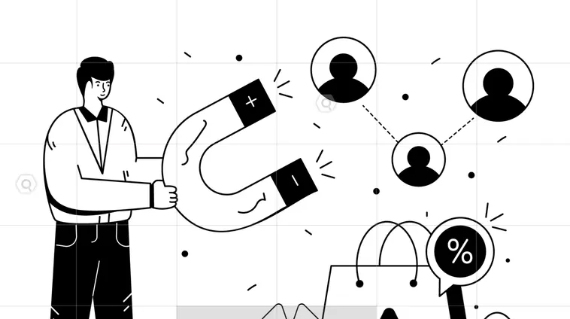
The 5 Breakpoints FrameWork™
After 20+ years diagnosing marketing problems at companies like Intuit, ADP, and Starwood, I've learned that struggling companies aren't doing bad marketing. They have one or more of five fundamental breakpoints that make even good tactics ineffective.
The Pattern I Keep Seeing
For two decades, I've led integrated marketing strategies for global brands across fintech, telecom, tourism, and SaaS. I've managed multi-million dollar budgets, coordinated 12 marketing channels, aligned 9 agencies, and built strategies for both B2B and B2C companies.
And in every single company, from startups to Fortune 500s, I've seen the same five problems repeat.
Many companies do not experience a sudden drop in performance.
Instead, growth gradually becomes harder.
Teams increase activity. Campaigns multiply. New tools and channels are introduced. For a short time results improve, but the effort required to maintain momentum continues to rise.
Inside the organization, marketing channels often operate separately. Different teams optimize their own objectives, sometimes repeating similar work or communicating different messages to the same customer. Time and budget increase, yet clarity does not.
At the same time, most organizations genuinely aim to be customer-centric. However, in practice customers are often expected to adapt to internal processes, handoffs, and messaging created around departmental responsibilities rather than around the customer’s experience.
This leads to a common situation: each team is performing its role, yet the overall journey feels inconsistent.
The natural assumption is that marketing needs optimization.
In many cases, the issue is not optimization. It is alignment.
Customers experience a company as one journey. Organizations operate through multiple functions. When positioning, onboarding, and ongoing communication do not reinforce each other, growth begins to stall even while teams are working effectively.
Across industries I kept seeing the same pattern. Growth did not slow randomly. It slowed at specific moments where the customer journey lost clarity.
I refer to these moments as The 5 Breakpoints Framework.
These are the five breakpoints that kill growth:
Unclear Positioning - Prospects don't understand what you do
Undefined Ideal Customer - Marketing to everyone, converting no one
Generic Messaging - One-size-fits-all content that resonates with no one
Siloed Channels - Disconnected touchpoints that fragment your story
Leaking Retention - Acquisition obsession while ignoring your highest ROI lever
These aren't execution problems. They're strategic breakpoints.
And when left unfixed, they compound.
Why "Breakpoints" Not "Problems"
I call these breakpoints because they're the specific points where your growth system breaks down.
Think of it like a machine. When one gear breaks, the whole system fails. You can pour more fuel in (more budget), run it faster (work harder), upgrade other parts (hire better people)—but until you fix the broken gear, nothing improves.
That's what these five breakpoints are: the gears in your growth system that, when broken, make everything else ineffective.
The good news: Once you identify which gear is broken, you can fix it systematically.
Foundation Breakpoints
Who you are and who you serve
These are the most critical. If your foundation is broken, nothing built on top of it works properly.
THE FIVE BREAKPOINTS
Breakpoint 1: Unclear Positioning
Growth becomes difficult when customers cannot quickly understand why the product matters.
Organizations often describe what they built instead of the problem it solves. Marketing messages become broad to reach more people, but the effect is the opposite. Prospects hesitate because relevance is unclear.
Your positioning sounds clever or creative, but not clear. You use analogies ("we're the Uber for X") or vague descriptors ("best-in-class platform for modern teams") that could describe 10,000 companies.
This creates downstream effects. Sales conversations become educational rather than conformational, onboarding requires excessive explanation, and customers who do purchase begin with uncertain expectations.
When positioning is clear, later stages of the journey become easier. When it is not, every team compensates for the confusion.
Why This Happens:
Fear of being too narrow - "If we're specific, we'll exclude potential customers".
Product-led thinking - Describing what you built instead of what problem you solve.
Trying to be clever - Prioritizing creativity over clarity.
Committee design - Everyone added their input, diluting the message.
Feature accumulation - Added features over time without updating core positioning.
The Hidden Cost:
This isn't just a messaging problem. Unclear positioning cascades through your entire business:
Sales cycles 20-30% longer because reps spend time explaining basics instead of selling value.
Close rates 15-25% lower because you're compared on price, not unique value.
Customer acquisition costs 40-60% higher because you need more touch-points to educate.
Breakpoint 2: Undefined Ideal Customer
You're marketing to vague demographic segments ("mid-market companies" or "growing businesses") instead of specific behavioral personas with identifiable decision triggers.
When asked who your ideal customer is, you say things like "mid-market B2B companies" or "enterprises looking to modernize." These aren't customers. These are categories.
You can describe your customers by company size, industry, and job titles but not by the behavioral signals that indicate they're ready to buy. You don't know the specific moment when a prospect becomes ready to purchase, so you market to everyone and hope some convert.
Your marketing budget gets wasted on conferences, ads, and content aimed at "target audiences" that include your ideal customer buried among thousands of wrong-fit prospects. Your sales team spends half their time disqualifying leads that never should have been in the pipeline.
Your best customers often don't match your stated target profile. When you analyze who actually succeeds with your product, you're surprised—they're not who you thought they'd be.
Why This Happens:
Confusing TAM with ICP - Total addressable market ("we can serve anyone in B2B SaaS") vs. ideal customer profile ("we're best for Series B SaaS companies with 50-150 employees experiencing rapid growth pain").
Fear of excluding - "If we narrow our target, we'll miss opportunities".
Demographic thinking - Targeting job titles instead of behavioral moments.
Haven't analyzed wins - Never systematically studied why your best customers bought when they did.
Product-led segmentation - "Anyone who needs our features" instead of "specific people experiencing specific pain".
The Hidden Cost:
Undefined ICP doesn't just waste budget it creates compounding problems:
50-70% of marketing budget wasted on wrong-fit prospects who will never buy.
High customer acquisition costs because you're casting too wide a net.
Random, unrepeatable results - can't scale what you can't define.
Longer sales cycles because you're educating wrong-fit prospects.
Higher churn because wrong-fit customers don't get value.
Execution Breakpoints
What you say and how you deliver it
Once foundation is solid, these breakpoints determine how effectively you execute.
THE FIVE BREAKPOINTS
Breakpoint 3: Generic Messaging
You deliver the same message to everyone regardless of their role, industry, company size, pain points, or journey stage. Your content feels generic because it's trying to speak to everyone and ends up resonating with no one.
Your email nurture sequence is the same for every lead. Enterprise prospects and SMB prospects see the same content. Someone who just discovered you and someone who's been evaluating for 3 months get the same messaging.
Your homepage tries to speak to multiple personas at once, so it ends up vague. Your content is feature-focused ("Here's what our product does") instead of problem-focused ("Here's the specific challenge you're facing").
Email engagement rates are declining. Open rates below 15%, click rates below 2%. You're getting "this isn't relevant to me" feedback. High unsubscribe rates. Your sales team creates their own materials because marketing content "doesn't work" for their conversations.
Why This Happens:
Efficiency over effectiveness - "It's easier to create one message than many"
Fear of complexity - "Segmentation sounds too complicated to manage"
Don't understand personas - Haven't mapped how different personas have different pain points
No behavioral data - Can't trigger relevant messaging because systems don't track behavior
Feature-focused content - Product team drives content, not customer team
No messaging framework - Haven't mapped which messages work for which audiences at which stages
The Hidden Cost:
Generic messaging doesn't just waste content budget, it leaves massive revenue on the table:
60-80% of your content is ignored by recipients (wrong message, wrong time, wrong person)
Personalized emails deliver 6x higher transaction rates - you're missing this
Segmented campaigns drive 760% more revenue than batch-and-blast
Wasted content production budget on generic material nobody engages with
Brand perception damage - "they don't understand my specific needs"
Lower conversion rates at every stage because messaging doesn't match intent
Breakpoint 4: Siloed Channels
Each marketing channel operates independently with different goals, messages, and metrics. Social tells one story, email tells another, your website says something different, and sales uses a fourth narrative. The customer journey feels like interacting with four different companies.
Your social media team has different goals than your content team has different goals than your paid ads team. Email marketing doesn't know what content marketing is doing. Sales uses different positioning than marketing.
Customer data is scattered across disconnected tools. Your CRM doesn't talk to your marketing automation doesn't talk to your analytics doesn't talk to your product data. You spend 100+ hours monthly exporting CSVs, manually merging data, and building reports that are out of date by the time you finish them.
Attribution is a mess. Social says they're driving awareness. Email says they're driving conversions. Paid says they're driving everything. Sales says none of it works. You can't see the unified customer journey, so budget allocation is guesswork.
Why This Happens:
Organizational structure - Teams organized by channel instead of customer journey
Channel specialists - Each person optimizes their silo, not the whole system
Different incentives - Social measured on engagement, paid on conversions, content on traffic—nobody measured on business outcomes (The North Star)
Technology silos - Tools that don't integrate, data trapped in separate systems
No owner of end-to-end - Nobody owns the complete customer experience
Lack of strategy - No integrated strategy coordinating cross-channel experience
The Hidden Cost:
Channel silos don't just create frustration they destroy effectiveness:
40-60% loss in campaign effectiveness due to fragmentation
Duplicated efforts across teams doing similar work
Inconsistent brand experience that erodes trust
Attribution confusion means budget gets allocated based on politics, not data
Can't personalize based on cross-channel behavior because you can't see it
Customer frustration with disjointed, repetitive, contradictory experiences
Multiplication Breakpoint
How you turn customers into growth engines
This is the most overlooked and highest ROI breakpoint.
THE FIVE BREAKPOINTS
Breakpoint 5: Leaking Retention
Obsessive focus on acquiring new customers while existing customers quietly churn through the bottom of your funnel. You're spending $50,000 to acquire customers and $500 to keep them; completely backwards from what retention economics justify.
Your entire marketing team focuses on acquisition. Demand generation, paid ads, content marketing, events; all aimed at getting new customers. The retention "team" is one person in customer success sending occasional emails.
You have no systematic onboarding process. New customers sign up and figure it out themselves. No engagement strategy beyond "hope they use the product." No proactive outreach to at-risk customers. You only find out about churn when someone cancels.
Your referral program is "tell your friends" with no infrastructure, incentives, or tracking. You have customers who love you, but no system to turn that love into advocacy and referrals.
Revenue growth is flat despite steady new customer acquisition. You're filling the bucket as fast as it's leaking out the bottom.
Why This Happens:
"Growth" means "new customers" - Culturally, retention is invisible
Easier to measure acquisition - Clear start and end, retention is ongoing
Executive pressure - Board wants new logo count, not retention rates
Comp plans reward acquisition - Marketing bonuses based on new customers only
Retention owned by CS - Marketing thinks "my job is done at sale"
Don't understand economics - Haven't calculated that retention is 5-25x more profitable
The Hidden Cost:
Ignoring retention isn't just leaving money on the table it's actively destroying your business:
Customer retention is 5-25x more profitable than acquisition (Bain & Company)
5% increase in retention can boost profits 25-95% (compounding effect)
Existing customers spend 67% more than new ones
Referred customers have 16% higher LTV and convert at higher rates
80% of churn is preventable with early intervention
Onboarding automation improves completion 30-50%
Every churned customer costs you their LTV plus the CAC you spent to acquire them
Why These Problems Compound
The Most Dangerous Insight:
These breakpoints don't exist in isolation. They cascade and compound each other.
This is why fixing one tactic never works. You can't "fix conversion" with a better landing page if your positioning is unclear upstream. You can't "fix retention" with better onboarding if you're acquiring wrong-fit customers through poor targeting.
You have to identify which breakpoint is primary, understand how it's creating secondary problems, then fix the system.
If this feels familiar
Many organizations recognize parts of this pattern but struggle to identify where the underlying friction actually begins.
The purpose of the 5 Breakpoints Framework is not to add more activity. It is to help clarify where the customer journey loses consistency and which changes will have the greatest impact across teams.
If these situations sound familiar in your organization, I am always open to exchanging perspectives and comparing observations.
You can reach me on LinkedIn, or connect with me here to compare notes.